
Reading
Our children read every day and are read aloud to every day, so that they experience reading as joyful, nurturing and positive.
Reading Intent
Reading Principles
Early Reading
We know how important it is to develop children's reading skills, but just as important is developing their love of reading.
To read more about our Early Reading and Phonics curriculum at Hangleton, click on the link.
Developing Readers
Vision for Reading at Hangleton
Becoming a confident reader is central to all that we do, and we focus on ensuring that children can express themselves, talk about their reading and quickly develop a love of stories and books in order to make links and help them make sense of the world around them. Rigorous daily phonics begins in week one of reception and allows our children to make rapid progress. Our children read every day and are read aloud to every day so that children experience reading as calming, nurturing and enjoyable and children quickly see themselves as readers.
We believe that equipping children with reading skills allows them to access the wider curriculum, leads to success in all areas of their education, inspires creativity, boosts self-confidence and offers greater potential to go on to lead rewarding and enriching lives.
At Hangleton, we recognise that there are similarities and differences between individuals and groups and we will strive to ensure that our differences do not become barriers to participation, access and learning. We have deliberately created inclusive processes and practices, where the needs of individuals and groups are quickly identified and interventions carefully planned to ensure that no child is left behind.
Our Principles of Reading are laid out at the top of this page.
Implementation
- Rigorous phonics teaching (Little Wandle) begins twice daily in week one of reception, to equip children for the very best start in reading (see Early Reading and Phonics)
- High quality core texts are used in each year group. By the end of their time at Hangleton, they will have an extensive bank of these.
- Children read in class across all subjects: extracts, fictional books, non-fiction texts, short texts, poetry, song lyrics, comic strips, wagolls.
- Whole class reading is used in KS1 & 2, using VIPERS skills to develop effective higher order reading skills.
- Children who need additional support regularly read 1:1 with an adult.
- Children at risk of being left behind in their reading are quickly identified and tailored reading interventions are carefully planned for.
- Reading buddies allow all children to feel successful in whole class reading
- Children are read to aloud each day, exposing them to a wide range of text types and stories including cosy story times with class teacher and blankets, cushions, calm lighting.
- The school library is regularly accessed for children to choose and borrow books and is a calm space to enjoy reading together.
- Reading happens all over the school, including outdoors, in forest school, in the sensory garden and on the reading chair!
- Author visits and book celebration events inspire and excite children’s love of reading e.g Brighton Festival City Reads events and visit to Brighton Dome to meet an author!
Oracy
- Oracy, conversation and classroom talk is a top priority and is woven into all aspects of learning.
- At Hangleton, children are immersed in a language rich environment in order to maximise their communication skills.
- We have high expectations for children to speak in full sentences and communicate their ideas cohesively.
- Pitch, progression and use of high quality vocabulary across the curriculum is modelled by the adults and displayed and ‘bumped into’ frequently.
- ‘Talk About’ sessions allow children to share the things that are important to them and that they are passionate about.
- ‘Ask ME About’ stickers help facilitate learning conversations with adults at home and at school.
- This bridging of the vocabulary gap underpins progress and attainment in reading and writing: children learn to read as a writer and write as a reader.
our school library
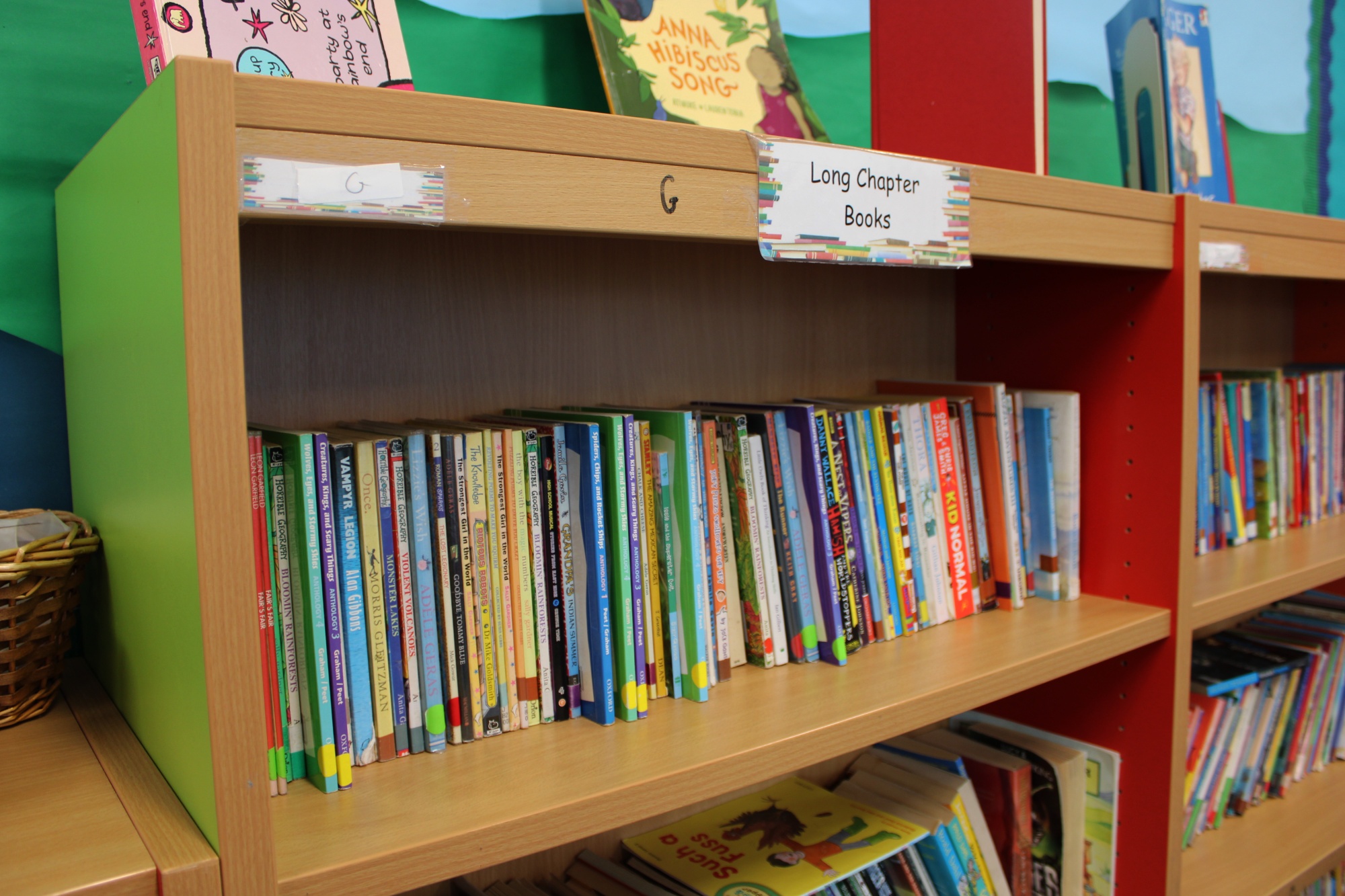
All children are given the opportunity to visit the library regularly.
Top Tips for Parents To support your child with Reading
VIPERS is an acronym to aid the recall of the six reading domains as part of the UK's reading curriculum. They are the key areas which we feel children need to know and understand in order to improve their comprehension of texts.
Use these bookmarks to prompt reading skills while reading.
VIPERS Bookmark EYFS/KS1
VIPERS Bookmark KS2
1. Choose a quiet time
Set aside a quiet time with no distractions (you can’t compete with TV or computer games).
2. tips for early reading
When your children are at the very beginning of the learning process encourage them to match the word with their finger as they read. Encourage them to read left to right with a return sweep at the end to the next line. It takes a while for them to understand the difference between letters and words and 1:1 matching helps them.
3. Make reading enjoyable
Children will bring home reading books from class and these are really important, but don’t forget to read the books you have at home for them to read too as this will give them a great variety and instil reading as a pleasurable activity. Choose books that children will enjoy and don’t put pressure on them to read harder books. To find out if a book is too tricky for them, let them read the first page – if they get stuck on more than five words, choose another book.
4. Regular practice
'Little and often' is best – 10 to 15 minutes a day including weekends and holidays. At the early stages of reading children need to read a thousand words a week to embed all the new information they need.
5. Maintain the flow
When they are reading words they find difficult, try not to say the word for them: give them time to process what it might be using their phonic knowledge before giving them a clue or telling them. Encourage them to think about what it could be.
6. Be positive
Give praise for what they did right, even the smallest achievement and point out in the text where they may have corrected themselves or tried to work out a word.
7. Talk about the books
Allow at least five minutes after you have read the book to chat about likes, dislikes, character and plot and any interesting words the author has used. This helps the children to understand what they have read and identify key elements of the story. In the early stages you can retell the story together using the pictures.
8. Keep reading
Don’t forget we are reading all the time in everyday life. For instance, over breakfast you can easily look at the packaging together and if your child can spot any words or phrases. On car journeys children love to spot words and print in the environment. Your child is more likely to read if you and your family all read too. Keep reading to your child, they need their bookish, enjoyable time with you to keep them motivated. Reading aloud is one of the most powerful things you can do with your child.
9. Visit the Library
The public library is an invaluable resource. Choose from a huge range of books and ask the professional staff for recommendations. It’s free to join and offers much more than just books. There are story times for children of all ages, and also rhyme and sing sessions for younger children and reading challenges for older children.

10. Look at these websites
http://www.grimmfairytales.com/en/main
Online storybooks. The text appears along with the graphics so you can read along with the stories.
http://www.roalddahlfans.com
The perfect website for every Roald Dahl fan.
http://www.phonicsplay.co.uk/
A fantastic website to help children with their reading.
https://www.bbc.co.uk/bitesize
A lively website for KS1 children.
Reading Aloud
Reading aloud to your child is one of the most powerful things that you can do. We know how important it is to develop children’s reading skills, but just as important is developing their love of reading, seeing reading as a joy and pleasure.
Reading with your child has wide-ranging benefits including:
‘comfort and reassurance, confidence and security, relaxation, happiness and fun. Giving a child time and full attention when reading them a story tells them that they matter. It builds self-esteem, vocabulary, feeds imagination and even improves their sleeping patterns.’ (National Literacy Trust)
Whatever their age, it is never too late to set aside 10 minutes (or however long you wish) to read aloud to your child, to share a story, to talk about what has happened. This promotes a strong sense of connection and wellbeing for both you AND your child.
If you are a family that speaks an additional language to English, why not read to your child in your mother tongue?
If you would like more information or guidance on what books to read that are appropriate for your child, then please contact your class teacher or Kim Fryer (kim.hearn-fryer@ekotrust.org.uk)